Scripture
- Leviticus 25:8–10 “‘Count off seven Sabbath years—seven times seven years—so that the seven Sabbath years amount to a period of forty-nine years. Then have the trumpet sounded everywhere on the tenth day of the seventh month; on the Day of Atonement sound the trumpet throughout your land. Consecrate the fiftieth year and proclaim liberty throughout the land to all its inhabitants. It shall be a jubilee for you; each of you is to return to your family property and to your own clan.'”
- Isaiah 61:1–2 “The Spirit of the Sovereign Lord is on me, because the Lord has anointed me to proclaim good news to the poor. He has sent me to bind up the brokenhearted, to proclaim freedom for the captives and release from darkness for the prisoners, to proclaim the year of the Lord’s favor and the day of vengeance of our God, to comfort all who mourn.”
- Luke 4:18–21 “‘The Spirit of the Lord is on me, because he has anointed me to proclaim good news to the poor. He has sent me to proclaim freedom for the prisoners and recovery of sight for the blind, to set the oppressed free, to proclaim the year of the Lord’s favor.’ Then he rolled up the scroll, gave it back to the attendant and sat down. The eyes of everyone in the synagogue were fastened on him. He began by saying to them, ‘Today this scripture is fulfilled in your hearing.'”
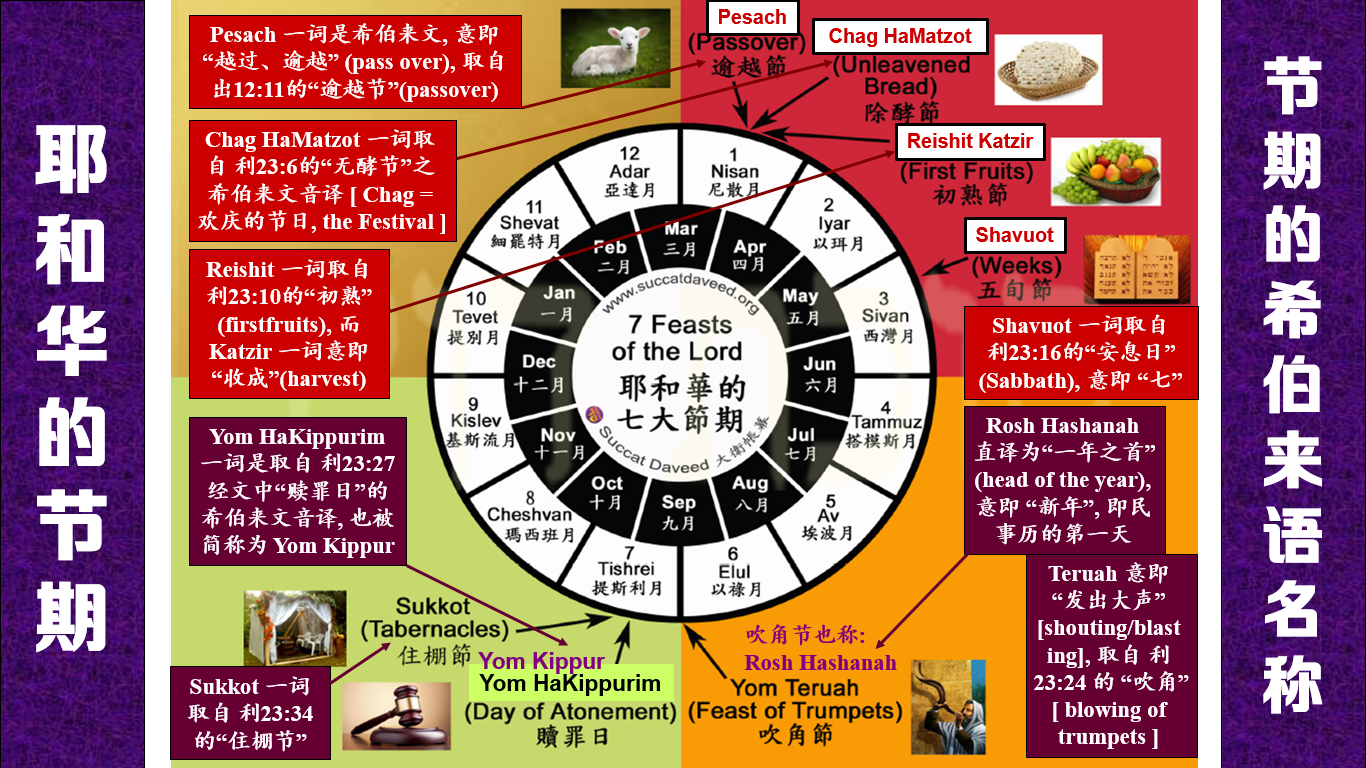
First, let’s look at some key facts regarding the month of Tishrei and the Jubilee:
- Tishrei 1 is the Feast of Trumpets, known as the New Year (Rosh HaShanah).
- Tishrei 10 is the Day of Atonement (Yom Kippur), the day on which the start of the Jubilee is announced.
- The Jubilee year begins on Tishrei 10, not Tishrei 1.
- The month of Tishrei corresponds to the period between September and October in the Gregorian calendar.
Leviticus 25 tells us that the Jubilee is a year for proclaiming liberty, releasing slaves, and forgiving debts; the land is to return to its original owner, and sowing is prohibited as the people rely entirely on God’s provision.
We know that everything in the Old Testament points to Christ; He is the reality who brings us freedom and release. The passages in Luke 4:18–21 and Isaiah 61:1–2 may be telling us that both comings of the Lord are related to the Jubilee.
The purpose of the Lord’s first coming was to proclaim the year of the Lord’s favor. The passage in Luke points to the fulfillment achieved through the Lord’s death and resurrection rather than through His anointing alone. Therefore, the Jubilee is more likely the year of the Lord’s death and resurrection rather than the year He began His ministry.
Isaiah’s prophecy contains two things: proclaiming the year of the Lord’s favor and the day of vengeance of our God. During His first coming, the Lord did not come for vengeance; thus, in Luke, the Lord stopped after mentioning the Jubilee and did not continue reading the text regarding “vengeance.” The Lord’s second coming will bring the day of vengeance and a more glorious Jubilee, comforting all who mourn.
According to the scriptures, perhaps both comings of the Lord are linked to the Jubilee, for it is the year ordained by God for people to gain freedom—and only Christ can truly set people free.
A Jubilee occurs once every 50 years. Based on the Year of Jesus’ Birth, if we calculate using the estimation that Jesus was born in 5 BC, then “Jesus himself was about thirty years old when he began his ministry” (Luke 3:23), which would be around AD 26.
The Lord Jesus preached for approximately three and a half years; thus, we can deduce that the crucifixion occurred around AD 30. If AD 30 was a Jubilee year, and a Jubilee occurs every 50 years, then the Jubilee closest to us would be AD 2030.
Even so, come, Lord Jesus!
Note:
The second coming of the Lord Jesus Christ will span a period of time, starting from the rapture of the overcoming Christians and ending with His public appearance when the heavens are rent—a period lasting about three and a half years. Unless otherwise specified, “the return of the Lord” mentioned in this menu refers to the point of His public appearing. The rapture of overcoming Christians occurs three and a half years before this public appearing.