Scripture
- Isaiah 46:10 “I make known the end from the beginning, from ancient times, what is still to come. I say, ‘My purpose will stand, and I will do all that I please.'”
- Genesis 1:1–2:2 “In the beginning God created the heavens and the earth. … The first day … the second day … the third day … the fourth day … the fifth day … the sixth day … By the seventh day God had finished the work he had been doing; so on the seventh day he rested from all his work.”
- 2 Peter 3:3–8 “Above all, you must understand that in the last days scoffers will come, scoffing and following their own evil desires. They will say, ‘Where is this “coming” he promised? Ever since our ancestors died, everything goes on as it has since the beginning of creation.’ … But do not forget this one thing, dear friends: With the Lord a day is like a thousand years, and a thousand years are like a day.”
- Exodus 7:7 “Moses was eighty years old and Aaron eighty-three when they spoke to Pharaoh.”
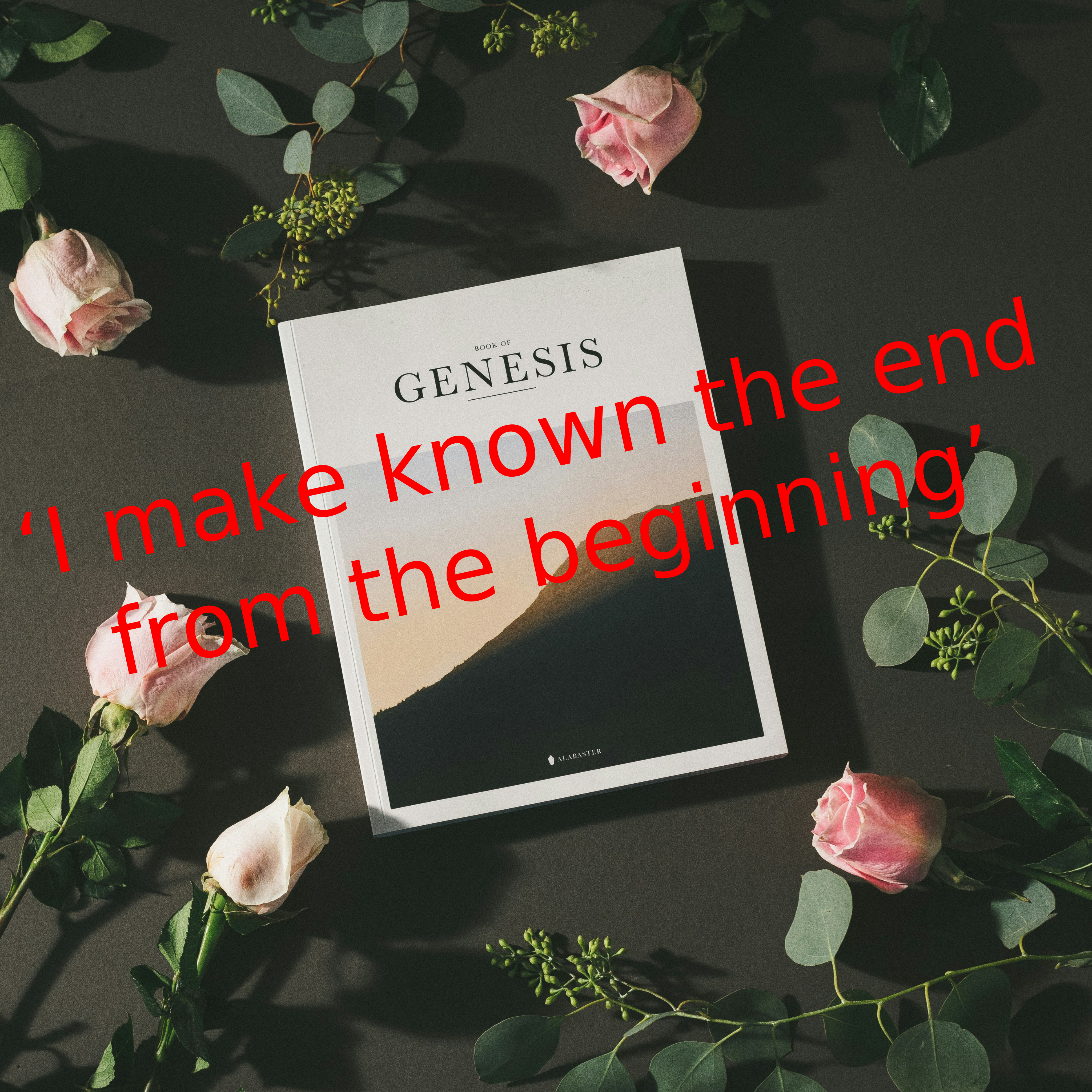
God says: “I make known the end from the beginning” (Isaiah 46:10).
“The beginning” naturally takes us back to the Book of Genesis. In Genesis, God tells us of His six days of creation and the seventh day of rest; it seems He did not explicitly mention “the end.” So, what exactly does God mean by “the end” that He made known from the beginning?
If we read the third chapter of 2 Peter, we see Peter speaking about the situation in the last days. Interestingly, while Peter describes the last days, he simultaneously references the original creation and the second coming of the Lord. At this very point, Peter says: “With the Lord a day is like a thousand years, and a thousand years are like a day” (Please refer to the third scripture passage at the beginning of this article).
As we know, the entire Bible has only one focus: our Lord Jesus Christ. His first coming dealt with the problem of sin, and He “will appear a second time, not to bear sin, but to bring salvation to those who are waiting for him.” Is Peter telling us that God already pointed to the Lord’s return at the end within the Genesis creation? Is he also suggesting that if a thousand years corresponds to one day of creation, then human history is pointing toward a span of seven thousand years?
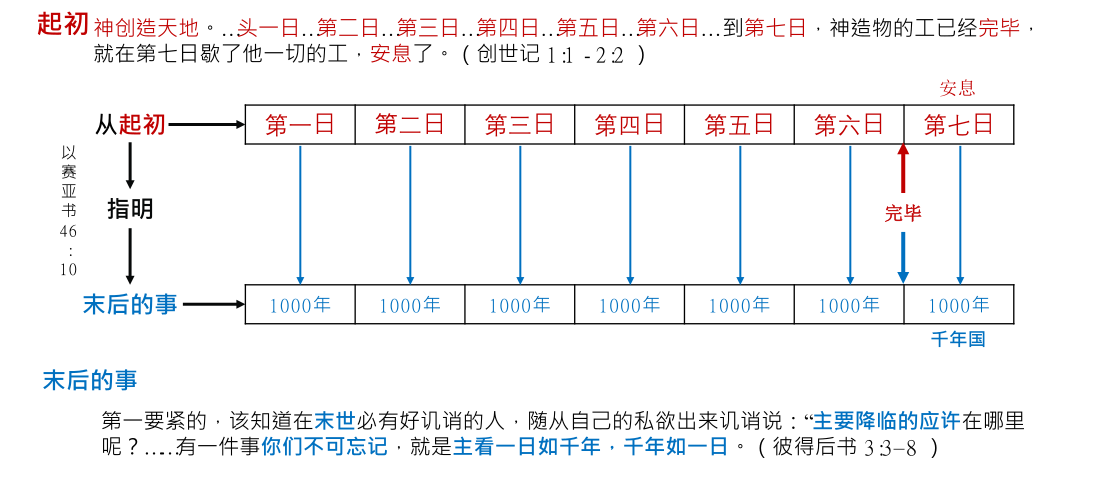
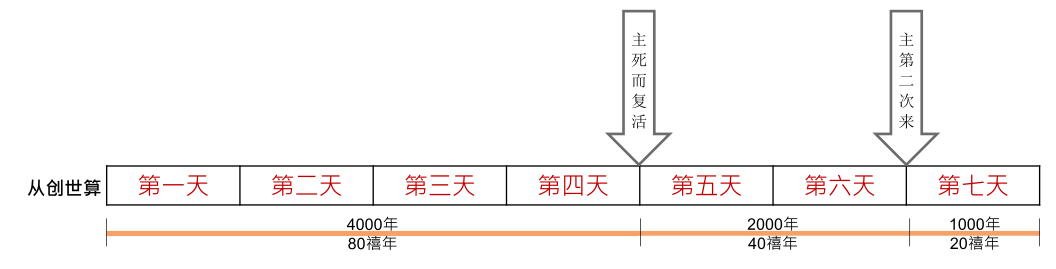
From creation to the first coming of the Lord Jesus and His crucifixion, approximately four thousand years passed. The Bible also reveals that when the Lord returns, He will inaugurate a thousand-year Kingdom period. If this thousand-year Kingdom corresponds to the seventh day of rest in creation, then the Lord’s return would occur at the end of the sixth millennium.
God is never arbitrary in anything, and the same applies to time. In the Old Testament, God gave the Law on Pentecost; in the New Testament, God sent the Holy Spirit on Pentecost. In the Old Testament, the Passover was established, and the Israelites who applied the blood of the lamb were spared from death; in the New Testament, the Lord Jesus was crucified on Passover, and those who receive the redemption of the Lamb’s blood are forgiven of their sins. God often uses the history and festivals of the Old Testament to foreshadow what is to be accomplished in the New Testament.
Is there, then, a foreshadowing in the Bible for the timing of the Lord’s first coming and the two-thousand-year period between His two comings?
Yes, there is!
God led the Israelites out of Egypt so they could enter the beautiful land of Canaan. The day God led them out through Moses was “the Lord’s Passover,” and Moses was eighty years old at that time (Exodus 7:7). Afterward, the Israelites wandered in the wilderness for forty years before entering Canaan. Our Lord is the true Passover Lamb; His crucifixion, death, and resurrection delivered those who believe in Him from the judgment and power of sin. However, our true entrance into the millennial kingdom must wait until the Lord returns. This period of waiting is foreshadowed by the time the Israelites spent wandering in the wilderness between the Exodus and the entrance into Canaan.
From a historical perspective, according to the principle of the Jubilee, four thousand years corresponds to eighty Jubilees, and two thousand years corresponds to forty Jubilees.
The Lord’s plan is becoming clearer to us. When we see Him face to face, there will be no need to ask. Today is still a time to seek; may we continue to prostrate ourselves at the Lord’s feet and contemplate with the pure heart He has given us.